How do you teach performance without asking everyone to become the same kind of artist?
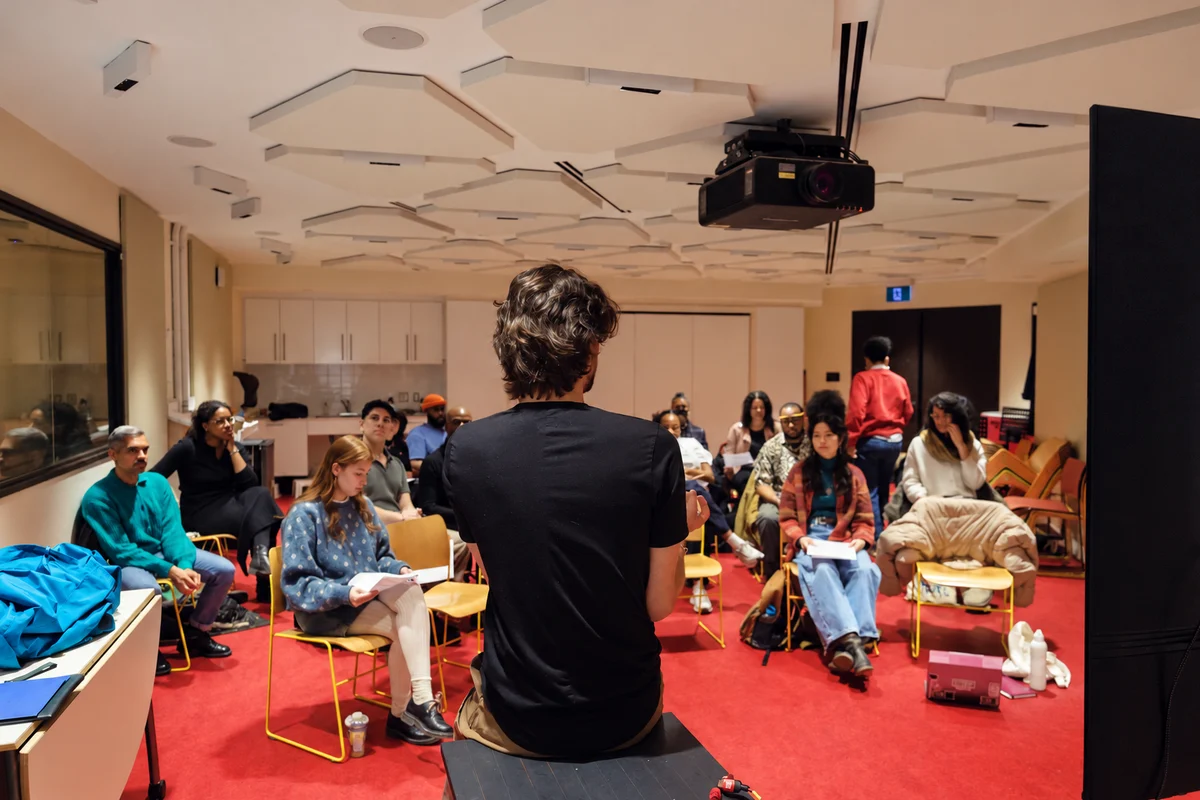
I bring questions, exercises and a structure for working together. Students bring their interests, experiences, impulses and ways of seeing. Those have to be able to change what happens in the room.
The inquiry
My teaching asks people to consider both what they are making and how they are making it. What is performance? What is a process? What is a risk? How are we responsible to ourselves, our collaborators and our communities?
In my teaching, I ask “Why this? Why now?” and “Why this way?” Those questions connect studio experimentation with what a performance means in relation to an audience.
Building a conversation across four years
At Toronto Metropolitan University, I developed the Conversations module with Cole Lewis and was its first instructor. The module brought together students from all four years of the acting program to discuss performance in relation to politics, society and culture.
Fourth-year students curated topics and readings. Third-year students facilitated smaller cross-year conversations, with mentorship and my guidance. Each session moved between group discussion, smaller conversations and self-reflection.
I prepared material and helped students take responsibility for the conversations. Their feedback during the course changed how I planned the lessons.
Making space for experimentation
In THF112: Creative Performance Studies, students made three short performances in changing ensembles. Observation, improvisation and adaptation offered different starting points; repeated showings and process journals gave them ways to notice and reflect on their choices.
The performance-process assignments assessed preparation, attempt, risk, focus, ideas and initiative. A polished final presentation was not the measure of success. Students had room to try something whose value they could not know in advance.
Practising feedback together
In the 2023 third-year Devised Project at UTM / Sheridan, creation and Critical Response Process became ways to practise collaboration. Students could explore when to act on an impulse, when to observe and how to respond to work without taking the choices away from its maker.
I use that same attention in CRP workshops with artists and organizations. I shape the session for the group, introduce the structure, and make time to practise it. The aim is to help people ask useful questions and make choices about the feedback they need.
“I felt that I learned a lot about working collaboratively with this project. CRP was a super helpful process to learn, and I plan to share it with my family. I feel empowered to respond to others’ work and to engage with different forms of art (paintings, films, music) in ways that I haven’t in the past through using CRP.”
Access in the process
People arrive with different needs and different ways of learning. I offer flexible presentation deadlines, written, oral or creative documentation formats, and self-evaluation connected to course objectives. These give students more than one way to participate and reflect on their development.
What I carry forward
A structure can give people confidence without deciding the work for them. I want students and participants to leave with tools they can adapt: ways to generate material, talk about what they notice, ask for feedback and take responsibility for a shared process.